This story was originally posted by Keith Powell on the WSU Foundation News website.
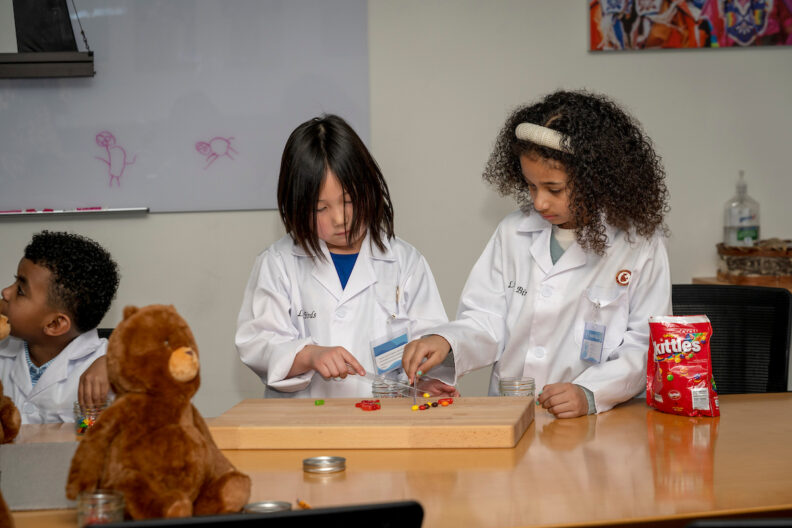
On a cold morning last spring, a young boy from a local tribal community near Spokane walked into his classroom wearing a white doctor’s coat nearly three sizes too big. He earned the coat during the pilot of Washington State University’s new Little Birds program—part of the Na-ha‑shnee Youth Pathway Programs in WSU’s Native American Health Sciences (NAHS).
He stood proudly beside his science teacher and announced, “I’m a scientist too.”
That moment, shared later with the NAHS team, captured everything Little Birds is designed to do: help Native youth see themselves in the health sciences as children, long before doubt has a chance to take root.
Planting the Seeds Early
Little Birds grew out of conversations with WSU’s Tribal Advisory Board. For years, NAHS has supported middle and high school students through a variety of programs, but by high school, many students have already decided science “isn’t for them.” Research backs this—children’s beliefs about their abilities and place in the world form early, often before age 12. Tribal leaders throughout the region had a clear message for the NAHS team: start earlier.
Jerry Crowshoe (Piikani Nation), director of programs and student services for NAHS, recognized the urgency. As a mental health psychologist, he knows that early experiences can shape a lifetime.
“Zero to 12 years old is a pivotal stage, where, in essence, a child’s mind gets hardwired in those 12 years for how they’re going see the world,” he explained. “And then, once the mind gets hardwired, they move into their identity phase. Who am I in this world that I painted and what’s possible for me?”
K-12 Coordinator Hannah Tomeo (Colville, Yakama, Nimiipuu, Sioux) had already been considering what age-appropriate health science exposure could look like. A teddy bear clinic model—used in large hospitals—served as inspiration. But she imagined something more immersive, culturally grounded, and accessible directly within tribal communities.
Together, Tomeo and Crowshoe envisioned a six-month, play-based pathway program led by current WSU health sciences students that could travel to reservation schools and Spokane-area classrooms. Participants would explore pharmacy, medicine, nursing, nutrition, and speech and hearing sciences through fun, hands-on activities.
“Kids learn best through play,” Tomeo said. “We realized that if we could bring the colleges to them, dress them up like doctors, and let them feel that identity, the experience could spark a love for science and that desire for the healthcare field at a really young age.”